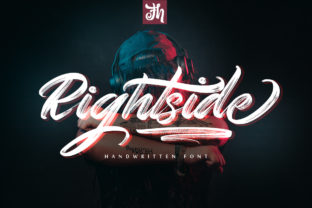
Rightside Font: Adding Warmth to Small Business Branding
I still remember the exact moment I realized my candle business had a typography problem. I was standing at a local maker’s market, watching potential customers pick up my lavender and sage jars, read the label for a split second, and then set them back down. The product smelled amazing, and the wax was perfectly smooth, but something about the presentation felt off. It wasn't until a fellow vendor mentioned that my labels looked "a bit too digital" that it clicked. I was using a standard system font that felt cold and mass-produced, completely at odds with the handmade, cozy nature of my small business. That afternoon, I went home and started searching for a typeface that actually felt like me. That search led me to Rightside, and it completely changed how I approach my brand visuals.
Finding Personality in a Premium Typeface
As entrepreneurs, we often get caught up in the logistics of running a business—sourcing materials, managing inventory, and handling shipping—and we sometimes treat design as an afterthought. But typography is the voice of your brand before a customer ever reads your copy. When I first tested the Rightside font on a mockup of my candle labels, the difference was immediate. This isn't just another script; it is a fun and sweet handwritten font that radiates energy without feeling childish or messy.
Rightside strikes a difficult balance that many display fonts miss. It has the organic, imperfect charm of actual handwriting, which signals to customers that a real person made this product. Yet, it retains enough structure to remain legible and professional. For my business, this meant I could finally create packaging that looked polished and trustworthy while still maintaining that artisanal warmth. It transformed my jars from generic products into little gifts that people wanted to keep on their nightstands.
Practical Applications for Product Packaging
If you are in the business of physical goods, you know that space on a label is precious. One of my biggest concerns when switching to a creative font was readability. I needed something that would work for the product name but wouldn't turn the scent description into an unreadable scribble. Rightside shines as a headline and display typeface. I use it prominently for the candle name and the short tagline on the front of the jar. It acts as a visual hook that draws the eye across a crowded table or a busy Instagram feed.
However, I learned quickly that this typeface is best used as an accent rather than a workhorse. For the fine print, ingredients list, and safety warnings, I pair Rightside with a clean, modern sans serif font. This combination creates a hierarchy that guides the customer’s eye naturally. The handwritten style provides the emotion and brand recognition, while the supporting sans serif ensures all necessary information is accessible. This simple font pairing strategy made my packaging look like it was designed by a professional agency rather than cobbled together in a free design tool.
Creating Consistency Across Touchpoints
Brand identity isn't built on a single label; it is built through repetition across every interaction a customer has with your business. Once I fell in love with how Rightside looked on my packaging, I began integrating it into other areas of my business to build a cohesive visual language. Consistency breeds trust, and seeing the same distinctive letterforms across different platforms helps cement your brand in a customer's memory.
- Thank-You Cards: Using Rightside for the header on my packing slips adds a personal touch that feels like a genuine note rather than a printed receipt.
- Social Media Graphics: I use the font for quote overlays and announcement posts. The energetic flow of the letters stops the scroll much better than standard bold text.
- Website Banners: On my shop homepage, Rightside highlights seasonal collections and sale announcements, adding a festive, welcoming vibe to the digital storefront.
- Stickers and Seals: A simple logo lockup using this font makes for beautiful branding stickers that seal tissue paper or shopping bags.
The beauty of this specific handwritten font is its versatility. It feels appropriate for a bakery box, a skincare label, or a boutique clothing tag because it taps into a universal sense of nostalgia and care. It doesn't pigeonhole you into one specific niche; instead, it elevates whatever you are selling by wrapping it in visual warmth.
Readability and Design Best Practices
While Rightside is incredibly charming, using it effectively requires some practical mindfulness. As business owners, we have to ensure our designs function in the real world, not just on our high-resolution monitors. When designing for small labels or mobile screens, size matters. Handwritten fonts can lose their distinct character if scaled down too aggressively. I found that keeping Rightside above a certain point size ensures the loops and connections remain crisp when printed on textured paper or viewed on a phone screen.
Contrast is another critical factor. Because this font has varying stroke widths and a playful rhythm, it needs breathing room. Avoid placing it over busy photographic backgrounds without a solid overlay or shadow. I typically use it on solid color blocks or negative space to let the letterforms sing. Also, consider the mood of your specific message. Rightside is inherently optimistic and sweet. It works beautifully for welcome messages, product names, and celebratory announcements. However, for serious policy updates or complex instructions, stick to your secondary, more neutral typeface to avoid mixed signals.
Licensing and Technical Considerations
Before you fall in love with any premium font, always verify the licensing terms. As a commercial user, you need to ensure you have the right to use the typeface on products for sale, digital templates, or client work. Rightside generally falls under the Script Amp category of fonts, which are designed specifically for creative professionals and business owners who need reliable, licensable assets. Always check the specific license file included with your download to confirm whether you need an extended license for things like merchandise resale or large-scale advertising.
You should also explore the OpenType features included with the font. Many high-quality handwritten fonts come with alternate characters, ligatures, and swashes that allow you to customize the look so it doesn't appear repetitive. Taking ten minutes to learn how to access these alternates in your design software can make your logo design or editorial layouts feel significantly more bespoke. Additionally, check for multilingual support if you plan to sell internationally or serve diverse communities. Having access to accented characters ensures your brand remains inclusive and professional across all markets.
The Impact of Intentional Typography
Switching to Rightside wasn't just an aesthetic upgrade; it was a shift in how I valued my own work. When your branding looks intentional and polished, you carry yourself differently as a business owner. You feel more confident at markets, more proud when sharing new products online, and more assured in your pricing. Customers sense this confidence. They perceive the extra care in your typography as a proxy for the care you put into your actual product.
Typography affects first impressions faster than almost any other design element. In a saturated market, the difference between a sale and a scroll-past often comes down to whether your visuals evoke the right feeling. Rightside offers a timeless look that bridges the gap between professional and personal. It tells your customers that there is a human behind the screen and hands behind the product. Whether you are refreshing a café menu, launching a new beauty line, or simply trying to make your Etsy shop feel more cohesive, choosing the right typeface is one of the most impactful investments you can make in your brand identity. It turns ordinary business materials into memorable experiences, proving that even the smallest design choices can yield significant returns in customer connection and brand loyalty.